How Does FitSpresso Work? The Four Pathways Explained
FitSpresso is built around a morning routine and six ingredients that each act on a different part of weight management. Here is what each pathway does, what the evidence actually supports, and where the limits are.
Quick answer
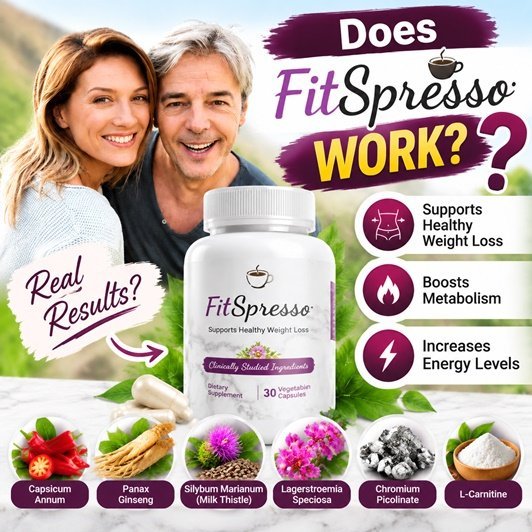
FitSpresso works by combining ingredients that support four areas at once: energy expenditure (Capsicum Annuum, Panax Ginseng), the use of stored fat as fuel (L-Carnitine), blood sugar and appetite balance (Chromium Picolinate, Banaba Leaf) and liver function (Milk Thistle). Each effect is modest on its own. The formula is designed to add a small, steady advantage to a calorie-aware diet and regular activity, not to cause weight loss by itself.
The idea behind FitSpresso
Most weight loss supplements are built around one headline ingredient, usually a stimulant. FitSpresso takes a different approach. Instead of pushing one lever hard, it spreads its formula across several smaller levers that influence how many calories you burn, how hungry you feel and how your body handles the food you eat.
The second part of the idea is timing. FitSpresso is designed to be taken with your morning coffee. Coffee itself contains caffeine and chlorogenic acids, which have their own small effects on alertness and metabolism. The capsule is marketed without added caffeine, so it adds metabolic support to a habit you already have without stacking another stimulant on top.
What about the "coffee loophole"?
You may have seen FitSpresso advertised with phrases like "coffee loophole" or "morning fat-burning hack." These are marketing labels, not scientific terms. The accurate version is simpler: a daily capsule taken with coffee is easy to remember, and consistency is what gives any supplement a chance to help. There is no hidden switch in your body that coffee unlocks.
Pathway 1: energy expenditure and thermogenesis
Your body burns calories all day just to stay alive, digest food and keep you warm. Thermogenesis is the part of that energy use that produces heat, and some compounds can nudge it up slightly.
Capsicum Annuum is the extract of red chili peppers. Its active compounds, capsaicinoids, have been studied in many small human trials. Pooled results suggest a modest rise in energy expenditure and fat oxidation, in the range of tens of calories per day rather than hundreds. That is small, but it works in the same direction as everything else you are doing.
Panax Ginseng is a traditional root used for energy and resilience. Research has looked at its effects on fatigue, glucose metabolism and brown adipose tissue, a type of fat that burns energy to produce heat. Most of the brown fat evidence comes from animal studies, so treat this pathway as plausible rather than proven in people.
Pathway 2: turning stored fat into fuel
To burn fat, your body first has to move fatty acids into the mitochondria, the energy factories inside your cells. L-Carnitine is the transport molecule that makes this possible. This role is well established in human biology.
The open question is whether taking extra L-Carnitine increases fat loss in healthy people who already make enough of it. Some analyses show a small additional weight reduction, especially in adults who are overweight, while others find little effect. The NIH Office of Dietary Supplements summarizes this mixed picture. The practical takeaway: L-Carnitine is most relevant when you are active, because that is when your body is calling on fat for fuel.
Pathway 3: blood sugar balance and appetite
Large swings in blood sugar can leave you tired and hungry an hour or two after eating. Smoothing those swings can make it easier to stick to sensible portions.
Chromium Picolinate is a trace mineral that helps insulin move glucose into cells. Studies on chromium and weight loss show small average effects, and some trials report reduced carbohydrate cravings. Banaba Leaf (Lagerstroemia speciosa) contains corosolic acid, which has been studied for supporting healthy glucose levels after meals.
Together, these two ingredients are the reason FitSpresso talks about "steady energy." The effect is not a stimulant buzz but fewer dips. Because both can lower blood sugar, they also explain the most important safety note on our FitSpresso side effects page: people on diabetes medication should speak to their doctor first.
Pathway 4: liver support
The liver processes nutrients, manages fat metabolism and clears waste products. Milk Thistle, whose active complex is silymarin, has a long history of use for liver health. It is not a fat burner. It is included as a general support ingredient for the organ that does much of the metabolic work. For a full breakdown of each component, doses and evidence quality, see our FitSpresso ingredients guide.
How the pathways work together
None of these ingredients produces dramatic weight loss on its own, and FitSpresso does not claim otherwise. The logic of the formula is additive: a slightly higher calorie burn, slightly better use of fat during activity, slightly fewer cravings and steadier energy. Each of those makes the real drivers of weight loss, a calorie deficit and regular movement, a little easier to sustain.
| Pathway | Ingredients | What it supports | Strength of evidence |
|---|---|---|---|
| Energy expenditure | Capsicum Annuum, Panax Ginseng | Slightly higher calorie burn | Moderate for capsicum, early for ginseng |
| Fat use | L-Carnitine | Moving fatty acids to be burned | Mixed for weight loss |
| Blood sugar and appetite | Chromium Picolinate, Banaba Leaf | Fewer energy dips and cravings | Small but consistent effects |
| Liver function | Milk Thistle | General metabolic support | Supportive, not weight-specific |
What FitSpresso cannot do
Being clear about the limits is the best way to avoid disappointment:
- It cannot override a calorie surplus. If you regularly eat more energy than you use, no supplement will make up the difference.
- It is not a medical treatment. It does not treat obesity, diabetes, thyroid disease or any other condition.
- It has not been tested as a finished product. The research covers individual ingredients, often at doses that may differ from those in the capsule.
- It works gradually. Any benefit builds over weeks. Our FitSpresso results timeline explains what to expect at each stage.
How to get the most out of it
Because every pathway is modest, the habits around the capsule matter most. Take it at the same time each day, eat in a moderate calorie deficit with plenty of protein and fiber, move daily and protect your sleep. Our step-by-step guide on how to take FitSpresso covers dosage, timing and a sample routine.
If you want to know whether people who follow this approach are happy with the outcome, read our FitSpresso reviews, which collect both positive feedback and common complaints.
Frequently asked questions
Does FitSpresso work without diet and exercise?
It is unlikely to produce meaningful weight loss on its own. FitSpresso is designed to support a calorie-aware diet and regular activity, not replace them.
Is FitSpresso a stimulant?
No. The capsule is marketed without added caffeine. Any stimulant effect comes from the coffee you choose to drink with it.
Do I have to take FitSpresso with coffee?
No. Coffee is simply the routine it is designed around. You can take it with water at the same time each morning.
How long does it take for FitSpresso to start working?
Effects such as steadier energy may be noticed within a few weeks, while changes in weight usually take 8 to 12 weeks of consistent use alongside diet and activity.
Ready to try the routine?
See the current FitSpresso packages, bonuses and the 180-day money-back guarantee on the official order page.
This page is for general information and is not medical advice. FitSpresso.net is an independent site and may earn a commission from purchases made through our links. Individual results vary.