FitSpresso Side Effects: What to Know Before You Start
Most healthy adults tolerate FitSpresso's ingredients well, but some people should be cautious. This guide covers possible side effects, medication interactions and who should avoid it.
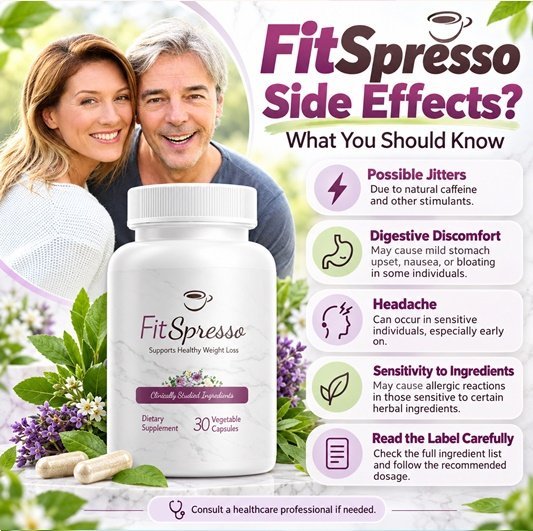
Short answer
Reported FitSpresso side effects are usually mild and digestive: stomach upset, heartburn or nausea, mostly linked to Capsicum and L-Carnitine. The more important risks are interactions. Chromium and Banaba Leaf can lower blood sugar, and Ginseng, Milk Thistle and L-Carnitine can interact with some medications, including blood thinners. Talk to your doctor first if you take any prescription medicine, and do not use FitSpresso if you are pregnant, nursing or under 18.
Common, mild side effects
Because FitSpresso contains no added caffeine or synthetic stimulants, the jittery, racing-heart feeling associated with many fat burners is not expected from the capsule itself. The effects people do report tend to be mild and temporary:
- Stomach discomfort or heartburn, most often linked to the chili pepper extract and more likely on an empty stomach.
- Nausea or loose stools, which can occur with L-Carnitine and milk thistle in some people.
- Headache, occasionally reported with chromium and ginseng.
- Trouble sleeping, which can come from ginseng, or more often from the coffee taken alongside the capsule.
These effects often settle within the first one to two weeks. Taking the capsule with breakfast rather than on an empty stomach helps many people. Our guide on how to take FitSpresso includes more practical tips.
How common are FitSpresso side effects?
No clinical trial has measured side effects for the finished FitSpresso formula, so there are no exact percentages. What we can say is that each ingredient is widely used in supplements and, at typical doses, is generally well tolerated by healthy adults. Customer feedback mostly describes no side effects at all, with a minority mentioning mild stomach discomfort in the first days.
It also helps to separate side effects from adjustment. Changing your diet, adding exercise and drinking a different amount of coffee all happen at the same time as starting a supplement, and any of them can cause tiredness, hunger or digestive changes in the first week.
Possible side effects by ingredient
Looking at each ingredient separately makes it easier to work out what might be behind a reaction. More background on each one is in our FitSpresso ingredients guide.
| Ingredient | Possible side effects | Main interaction concerns |
|---|---|---|
| Capsicum Annuum | Heartburn, stomach irritation | May add to stomach irritation with NSAID painkillers |
| Panax Ginseng | Insomnia, headache, nervousness | Blood thinners, diabetes drugs, MAOI antidepressants |
| Milk Thistle | Digestive upset, allergic reactions | Daisy or ragweed allergy, some diabetes drugs |
| Banaba Leaf | Low blood sugar in some people | Insulin and diabetes medication |
| Chromium Picolinate | Rare stomach upset, headache | Insulin, diabetes drugs, levothyroxine |
| L-Carnitine | Nausea, fishy body odor | Warfarin, thyroid hormone |
Medication interactions
For most people, interactions are a bigger concern than side effects. Speak to a doctor or pharmacist before starting FitSpresso if you take:
- Diabetes medication or insulin. Chromium and Banaba Leaf may lower blood sugar. Combined with medication, that could push levels too low. Signs include shakiness, sweating, confusion and a fast heartbeat.
- Blood thinners such as warfarin. Ginseng and L-Carnitine have been reported to affect how warfarin works.
- Thyroid medication. Chromium can reduce the absorption of levothyroxine if taken at the same time, and L-Carnitine may affect thyroid hormone activity.
- Antidepressants, particularly MAO inhibitors, which may interact with ginseng.
- Any other regular prescription. Bring the bottle or a photo of the label to your appointment so your doctor can see the full list.
Who should avoid FitSpresso
FitSpresso is intended for healthy adults. It is not suitable for:
- Pregnant or breastfeeding women.
- Anyone under 18.
- People with a known allergy to any ingredient, or to plants in the daisy family.
- People with a diagnosed medical condition, such as diabetes, liver disease, kidney disease or a thyroid disorder, unless their doctor approves it.
- Anyone scheduled for surgery in the next two weeks, because of the possible effects of some ingredients on bleeding and blood sugar.
The coffee factor
The capsule itself is marketed without added caffeine, but FitSpresso is designed to be taken with coffee. If you feel restless, anxious or have trouble sleeping after starting, the coffee is often the more likely cause. The U.S. FDA considers up to about 400 mg of caffeine a day, roughly four cups of brewed coffee, generally safe for healthy adults. If you are sensitive, keep to one cup in the morning and avoid caffeine after early afternoon.
How to lower the risk of side effects
- Check with your doctor first if you take any medication or have a health condition.
- Take it with food to reduce the chance of heartburn or nausea.
- Never exceed the serving size shown on the label.
- Avoid stacking FitSpresso with other weight loss supplements or stimulant products.
- Keep a short log during the first two weeks, noting how you feel, so you can spot patterns.
When to stop and get help
Stop taking FitSpresso and contact a healthcare professional if you have persistent digestive problems, symptoms of low blood sugar, unusual bruising or bleeding, yellowing of the skin or eyes, or any reaction that worries you. Seek emergency care straight away for signs of a serious allergic reaction, such as swelling of the face or throat or difficulty breathing.
In the United States, you can also report a reaction to a supplement through the FDA's MedWatch program.
If FitSpresso does not agree with you, the 180-day money-back guarantee lets you request a refund. Our FitSpresso price and where to buy page explains how the refund process works. You can also read what other customers experienced in our FitSpresso reviews.
Frequently asked questions
Does FitSpresso cause jitters?
The capsule is marketed without added caffeine, so jitters are not expected from FitSpresso itself. If you feel jittery, check how much coffee or other caffeine you are having.
Can FitSpresso raise blood pressure?
It contains no added stimulants, so a rise in blood pressure is not expected. If you have high blood pressure, check with your doctor and keep your coffee intake moderate.
Is FitSpresso safe for people with diabetes?
Only with your doctor's approval. Chromium and Banaba Leaf may lower blood sugar and can add to the effect of diabetes medication.
Is FitSpresso safe long term?
The individual ingredients are commonly used, but long-term safety of the finished formula has not been studied. Many people take periodic breaks and review their use with a doctor.
Cleared by your doctor?
Every FitSpresso order is covered by a 180-day money-back guarantee if it does not suit you.
This page is for general information and is not medical advice. FitSpresso.net is an independent site and may earn a commission from purchases made through our links. Individual results vary.