FitSpresso Ingredients: What's Inside and What the Research Says
A close look at all six FitSpresso ingredients: what each one is, why it is in the formula, how strong the evidence is and what to watch out for.
Quick answer
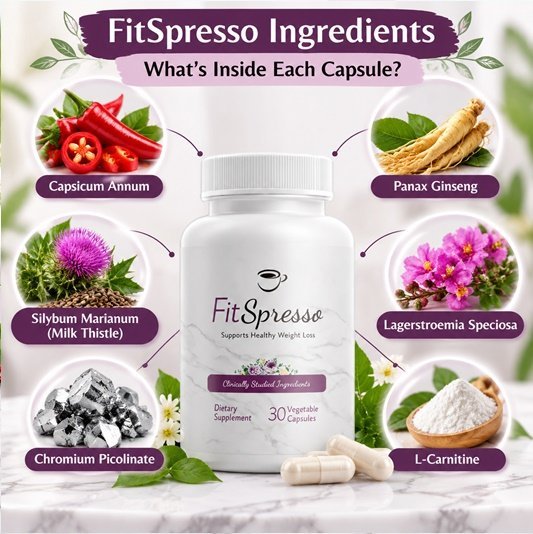
The six FitSpresso ingredients are Capsicum Annuum (chili pepper extract), Panax Ginseng, Milk Thistle, Banaba Leaf, Chromium Picolinate and L-Carnitine. Together they target energy expenditure, fat use, blood sugar balance and liver function. Each ingredient has been studied individually; the finished product has not been tested in its own clinical trial. The capsule is marketed without added caffeine.
FitSpresso ingredients at a glance
Every ingredient in FitSpresso is named on the label rather than hidden in a vague blend. The table below gives the overview. The sections that follow go into each one in detail, including the quality of the research behind it.
| Ingredient | Source | Main role in the formula | Evidence |
|---|---|---|---|
| Capsicum Annuum | Red chili pepper | Thermogenesis, energy use | Moderate |
| Panax Ginseng | Asian ginseng root | Energy, metabolic balance | Early to moderate |
| Milk Thistle | Silybum marianum seed | Liver support | Supportive |
| Banaba Leaf | Lagerstroemia speciosa leaf | Healthy blood sugar levels | Early |
| Chromium Picolinate | Trace mineral | Insulin action, cravings | Small but consistent |
| L-Carnitine | Amino acid derivative | Fat transport for energy | Mixed |
To understand how these ingredients fit together as a system, read how FitSpresso works. This page focuses on each component on its own.
Capsicum Annuum
What it is: an extract from red chili peppers, rich in capsaicin and related capsaicinoids, the compounds that make peppers hot.
Why it is included: capsaicinoids activate receptors that slightly increase energy expenditure and fat oxidation. Human studies, collected in reviews on PubMed, point to a real but small effect, alongside a possible reduction in appetite after meals.
Watch out for: heartburn or stomach irritation in sensitive people, especially on an empty stomach.
Panax Ginseng
What it is: the root of Asian ginseng, used for centuries in traditional medicine as a tonic for energy and stamina.
Why it is included: ginsenosides, its active compounds, have been studied for effects on fatigue, glucose metabolism and brown adipose tissue. Human trials on weight are limited and results vary, so ginseng is best viewed as a supporting ingredient for energy and metabolic balance.
Watch out for: trouble sleeping in some people, and possible interactions with blood thinners, diabetes medication and certain antidepressants.
Milk Thistle
What it is: a flowering plant whose seeds contain silymarin, a group of antioxidant compounds.
Why it is included: milk thistle is one of the most widely used botanicals for liver support. The liver plays a central role in fat and glucose metabolism, which is why it appears in a weight management formula. The NIH's NCCIH notes that research on its benefits is still mixed.
Watch out for: mild digestive upset, and allergic reactions in people allergic to plants in the daisy family such as ragweed.
Banaba Leaf
What it is: the leaf of the banaba tree, native to Southeast Asia. In the Philippines it has traditionally been brewed as a tea.
Why it is included: banaba contains corosolic acid, which small human studies link to lower blood glucose after meals. Steadier blood sugar can mean fewer energy dips and cravings.
Watch out for: because it may lower blood sugar, it can add to the effect of diabetes medication.
Chromium Picolinate
What it is: chromium is an essential trace mineral; picolinate is a form that the body absorbs relatively well.
Why it is included: chromium helps insulin do its job. According to the NIH Office of Dietary Supplements, trials show small effects on body weight, and some research suggests fewer carbohydrate cravings.
Watch out for: interactions with insulin, diabetes drugs and thyroid medication (levothyroxine). Rarely, stomach upset or headaches.
L-Carnitine
What it is: a compound your body makes from amino acids and also gets from meat and dairy.
Why it is included: L-Carnitine carries fatty acids into the mitochondria, where they are burned for energy. Whether extra carnitine boosts fat loss is debated; some analyses find a modest benefit in adults who are overweight.
Watch out for: nausea or stomach upset at higher doses, a "fishy" body odor in some people, and interactions with blood thinners such as warfarin. The full safety picture is on our FitSpresso side effects page.
Why these six ingredients are combined
Each ingredient on its own has a small effect. The reason for combining them is that they act on different parts of the same problem. Capsicum and ginseng work on how much energy you use. L-Carnitine works on what fuel you burn. Chromium and banaba work on how steady your blood sugar and appetite are. Milk thistle supports the liver, which sits in the middle of all of these processes.
In theory, small effects on several pathways can add up to a more noticeable difference than a large dose of one ingredient, with fewer side effects than a single high-strength stimulant. In practice, this combined effect has not been measured in a trial of the finished product, so it remains a reasonable design choice rather than a proven result. It also means the formula relies on you doing your part: the more active you are and the more sensible your diet, the more these ingredients have to work with.
What is not in FitSpresso
Just as important as what is in a formula is what is left out. FitSpresso is marketed as:
- Free of added caffeine, so it can be paired with coffee without doubling your stimulant intake.
- Free of synthetic stimulants such as those found in some aggressive fat burners.
- Non-GMO, gluten-free and plant-based, according to the manufacturer.
This puts it in a different category from most stimulant-driven fat burners. Our FitSpresso vs others comparison shows how that difference plays out in practice.
Reading the supplement facts label
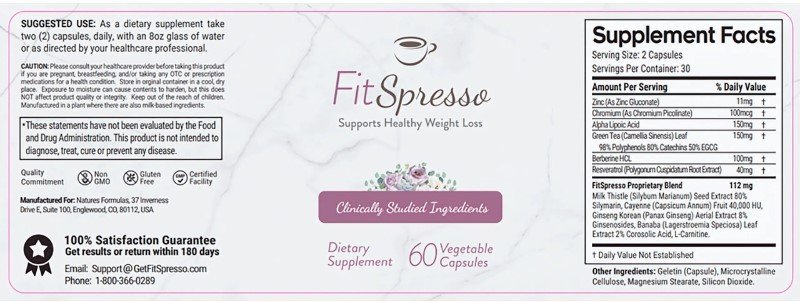
The research cited above often uses specific doses. To judge whether FitSpresso contains meaningful amounts, compare the label with those studies. Check three things on the bottle:
- Serving size and how many capsules make up one serving.
- The amount of each ingredient per serving, or whether some are grouped in a blend.
- Warnings, including age limits and guidance for pregnancy, nursing and medication use.
If you are wondering how customers feel about the formula after a few months, see our FitSpresso reviews.
Frequently asked questions
Does FitSpresso contain caffeine?
FitSpresso is marketed as having no added caffeine. It is designed to be taken alongside coffee, so your caffeine intake depends on what you drink with it.
Are FitSpresso ingredients natural?
Five of the six are plant extracts or naturally occurring compounds, and chromium is a mineral. Natural does not automatically mean free of side effects or interactions.
Is FitSpresso vegan?
The manufacturer describes it as plant-based. Check the label for the capsule material if you follow a strict vegan diet.
Are FitSpresso ingredients clinically proven?
Each ingredient has been studied on its own, with evidence ranging from early to moderate. The finished FitSpresso formula has not been tested in its own clinical trial.
Compare the ingredients with the price
Check the current FitSpresso packages and the 180-day money-back guarantee on the official order page.
This page is for general information and is not medical advice. FitSpresso.net is an independent site and may earn a commission from purchases made through our links. Individual results vary.